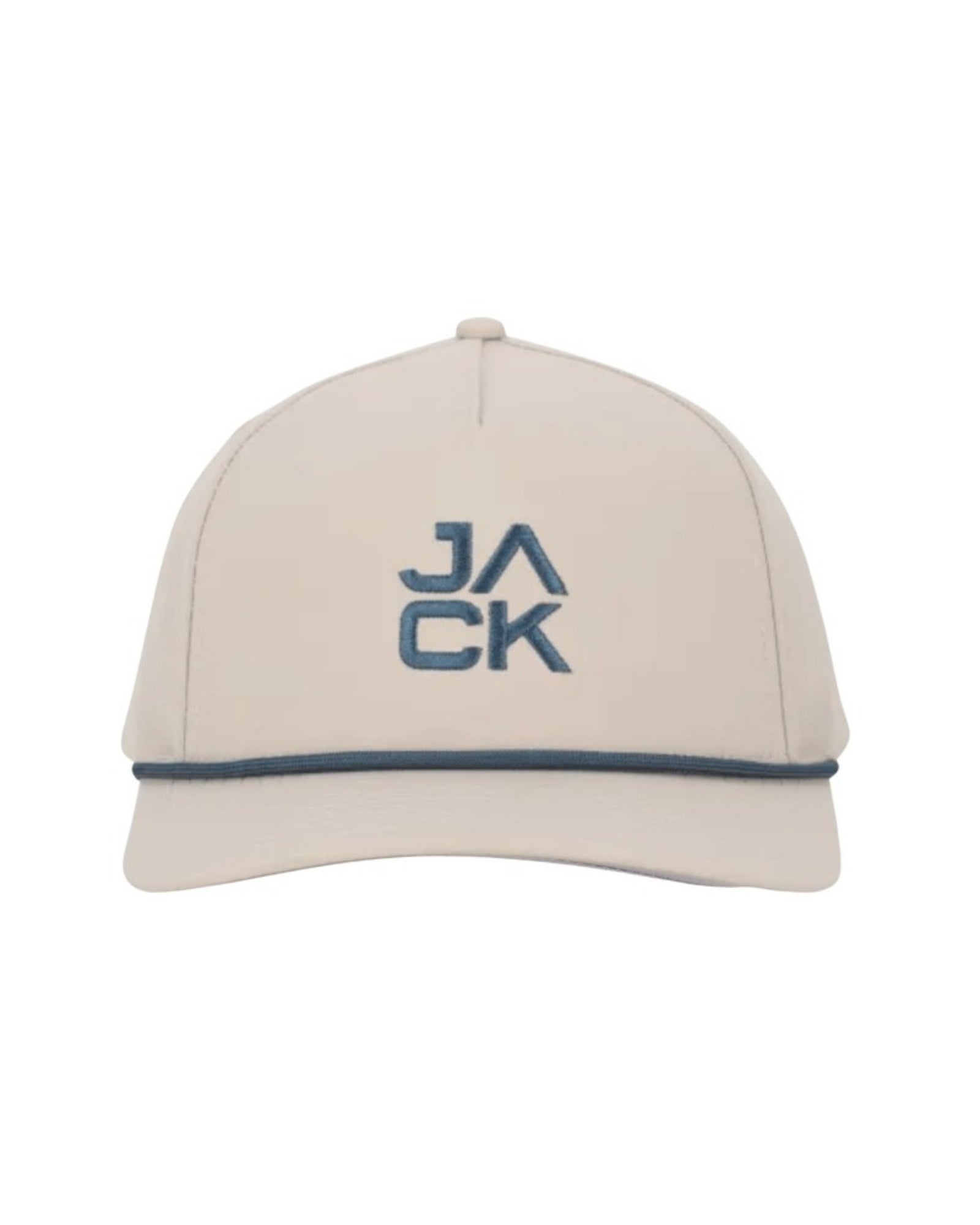
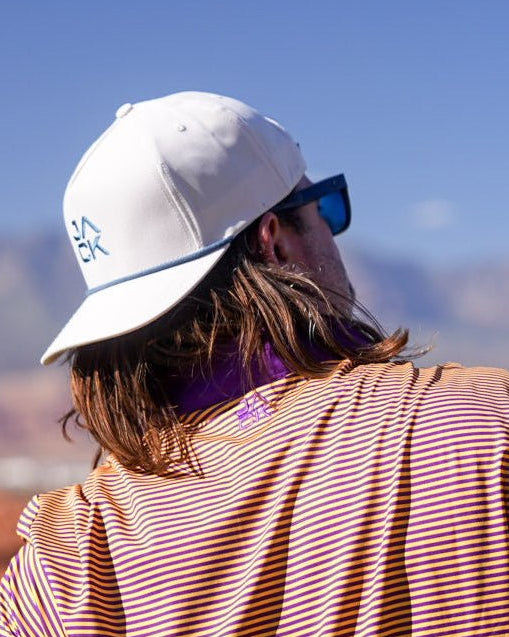
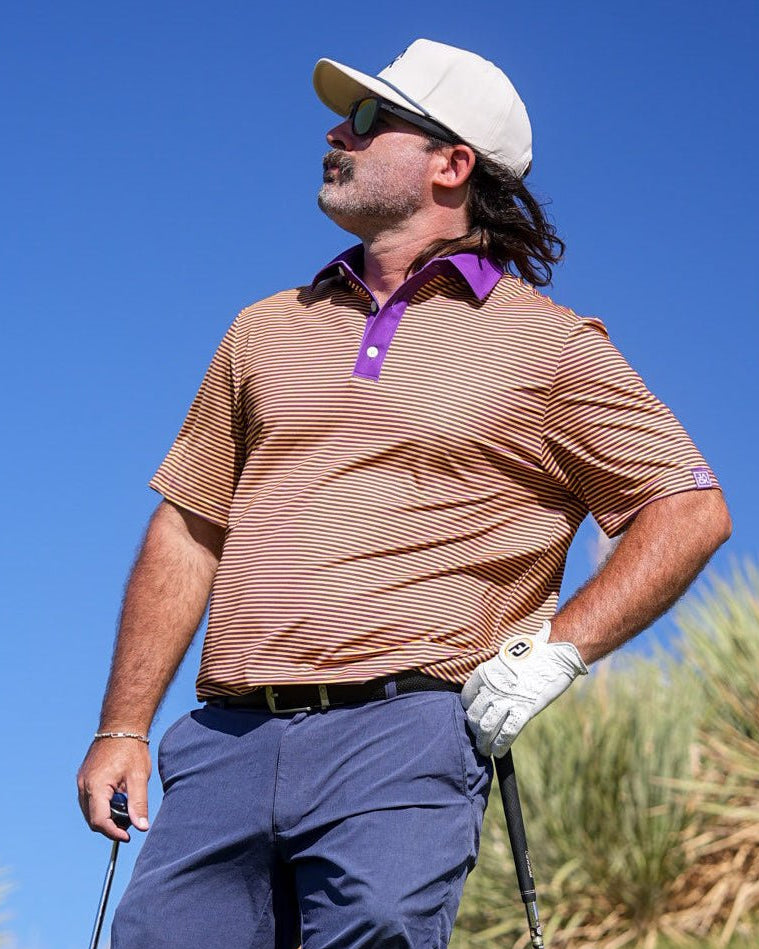
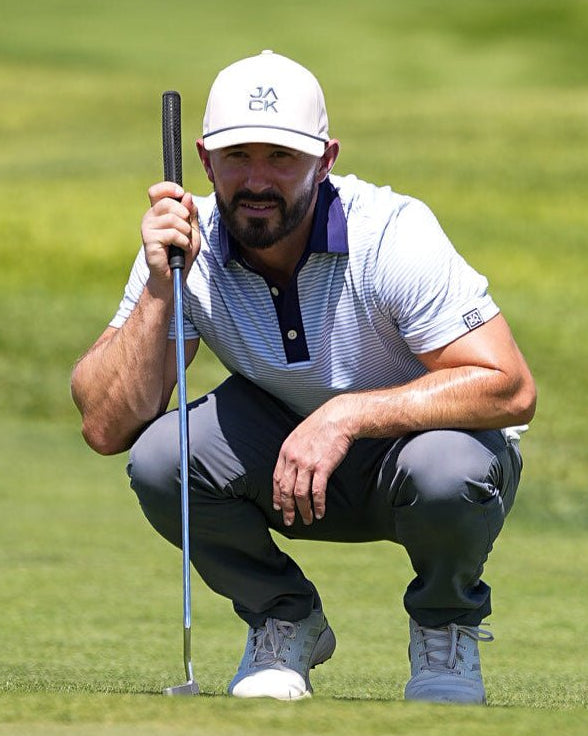
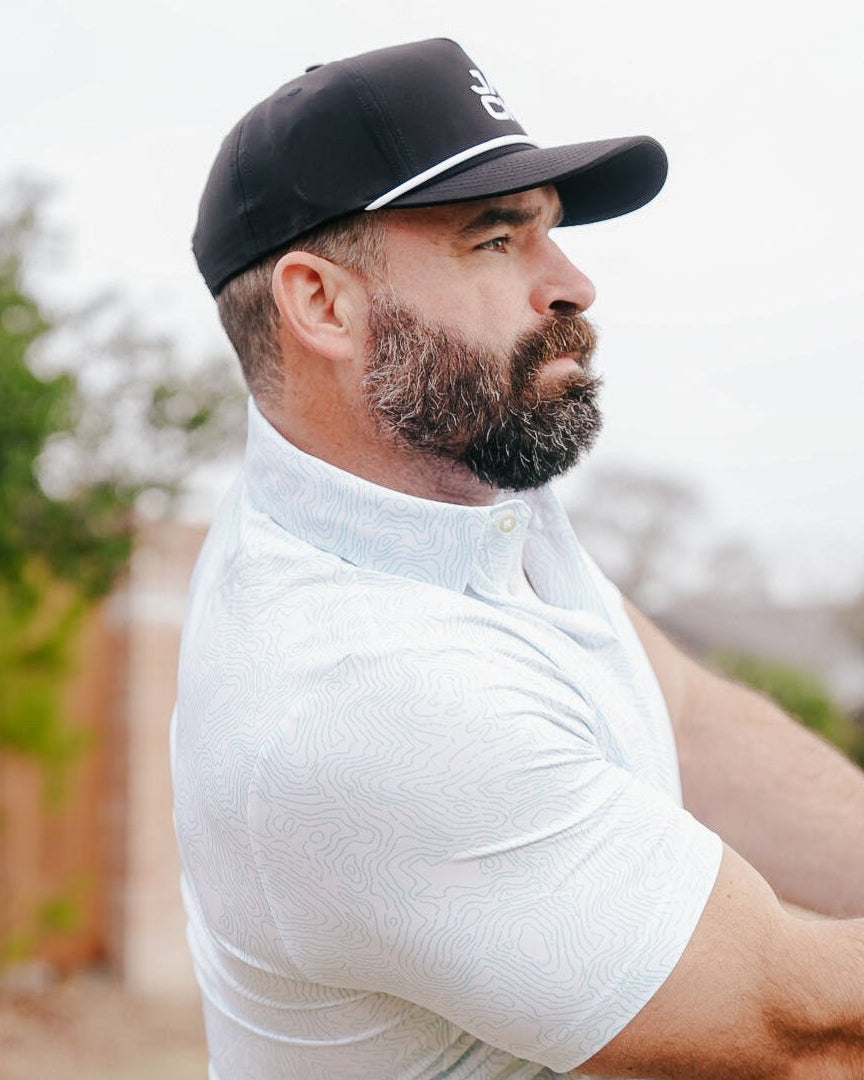
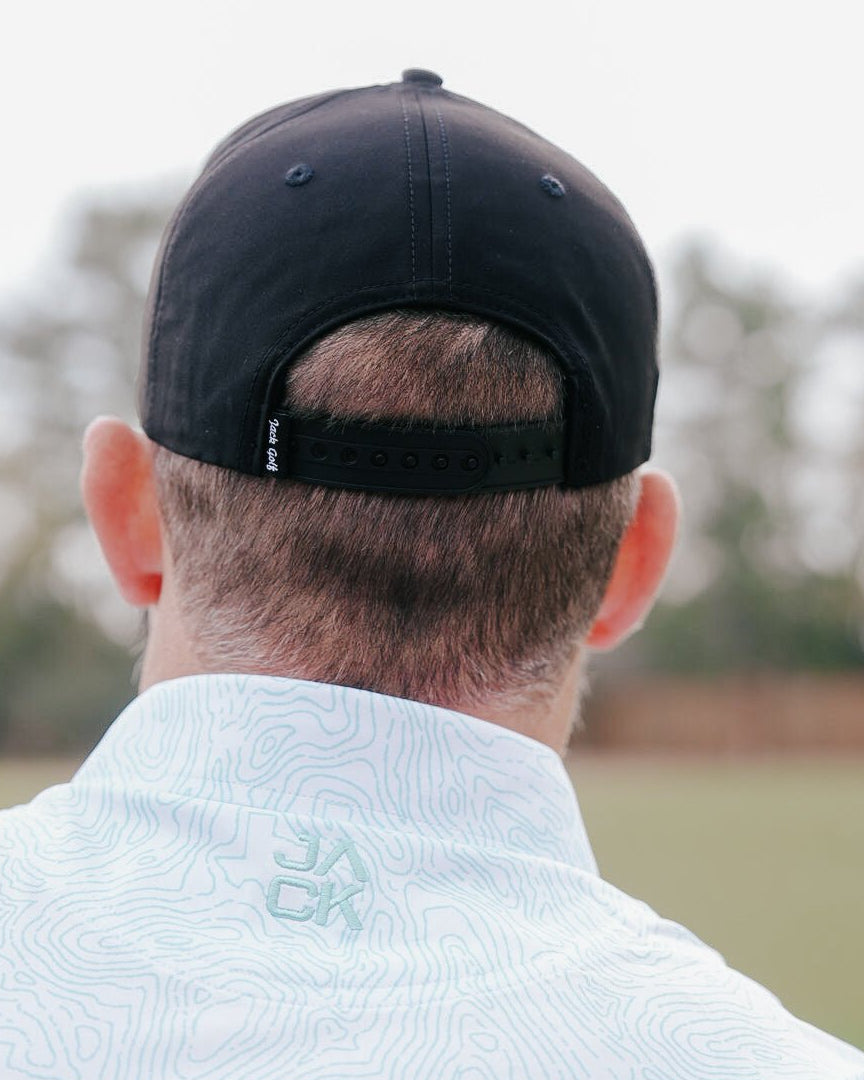
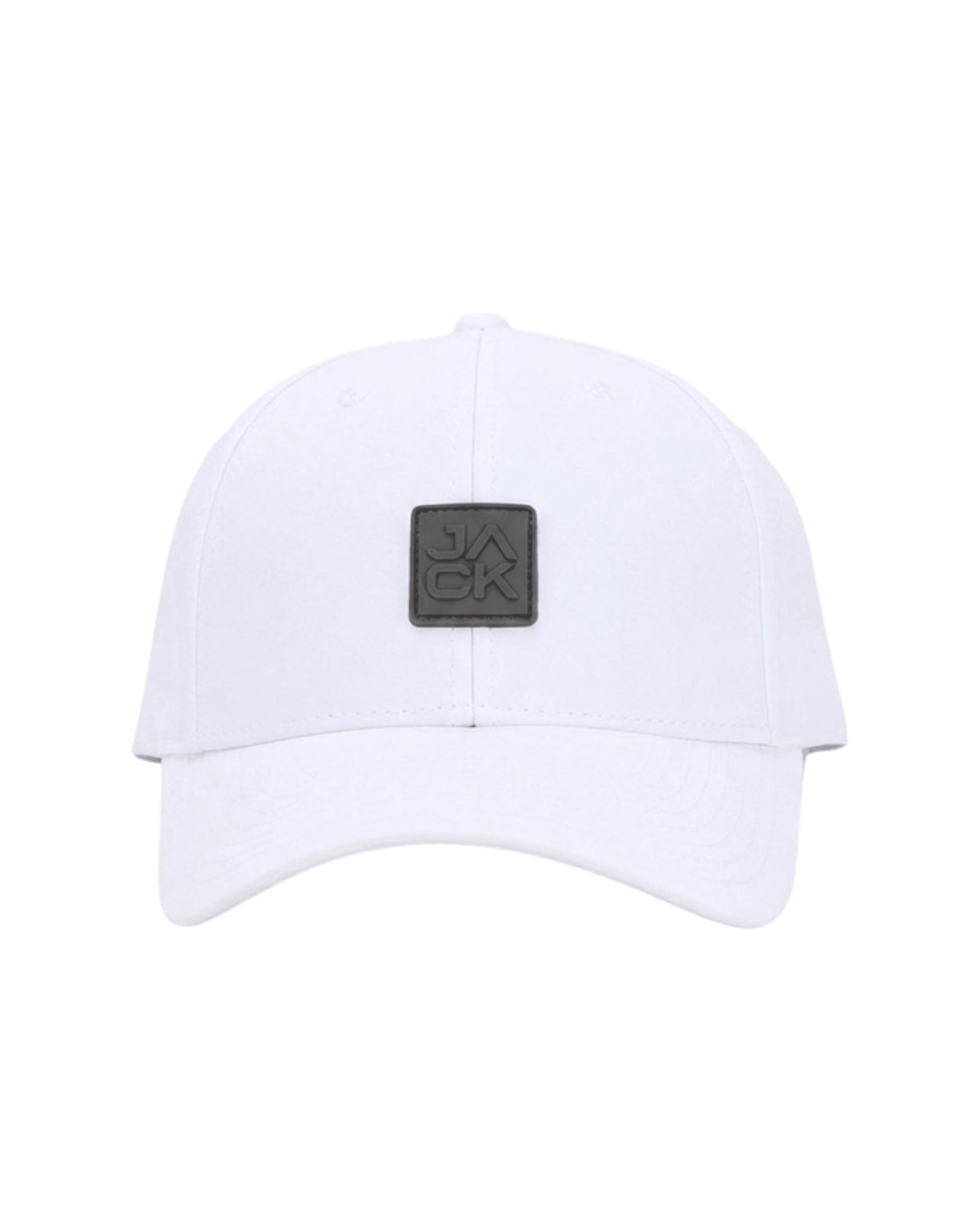
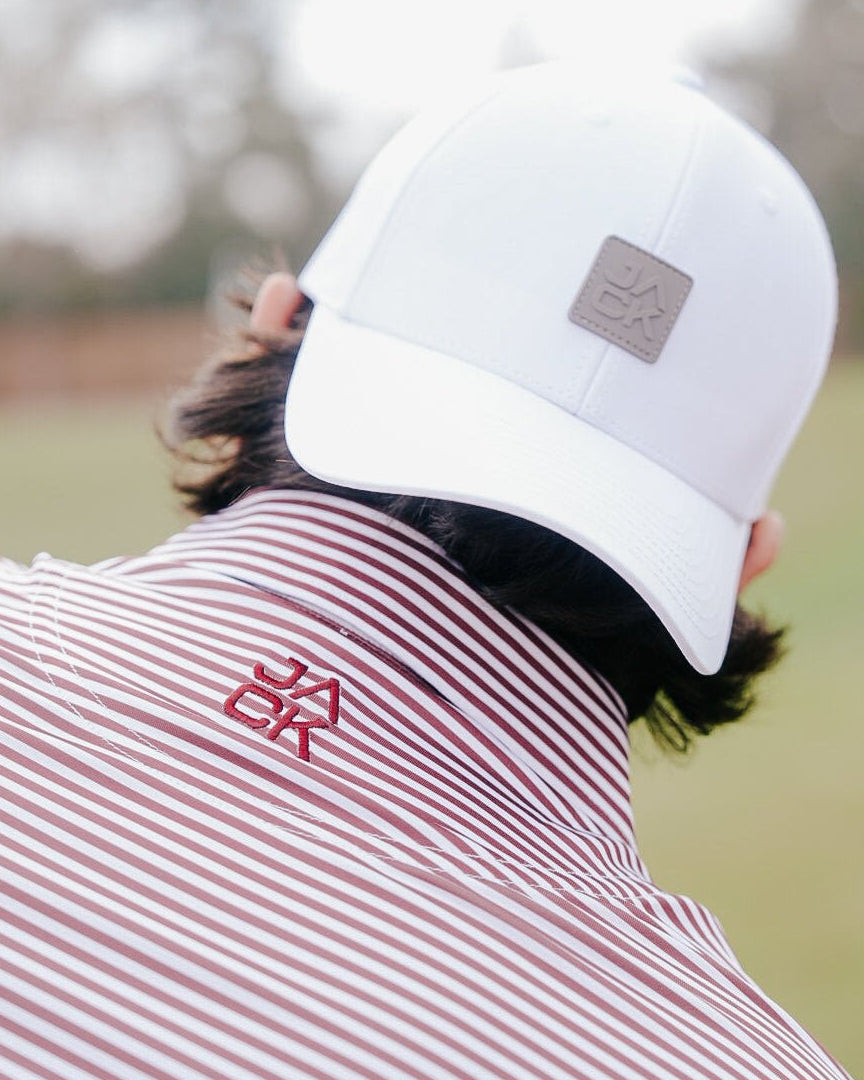
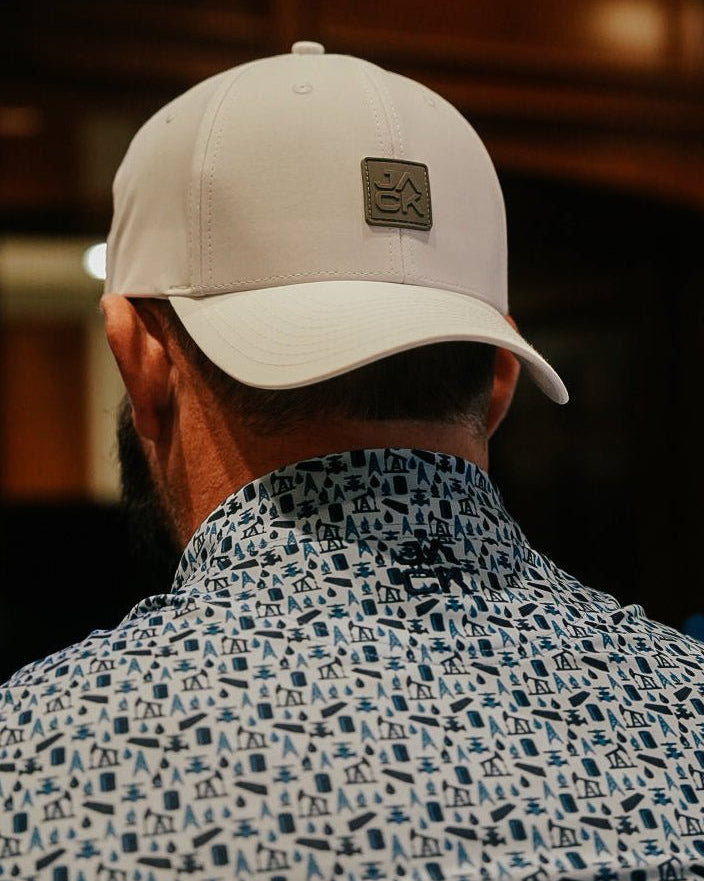
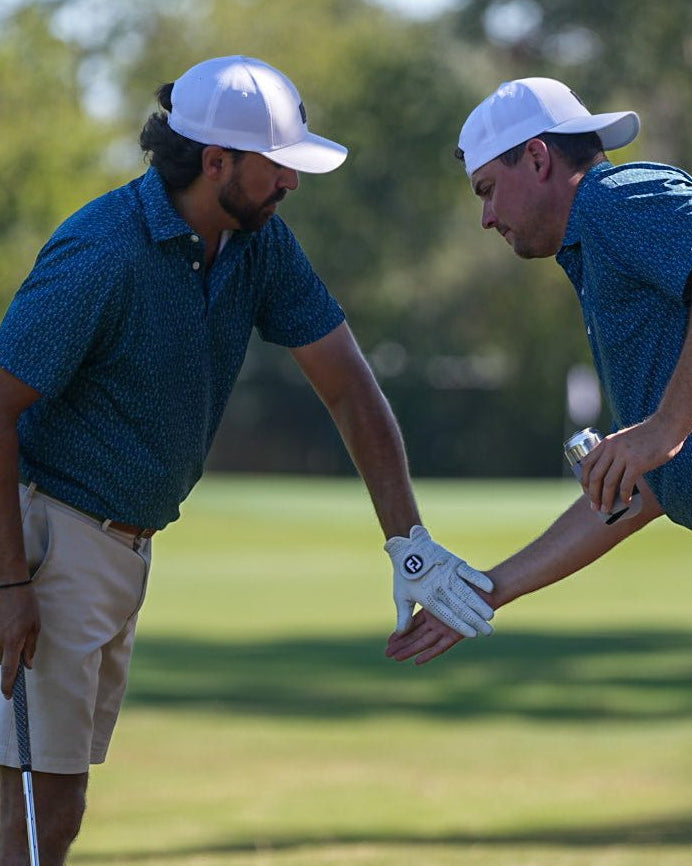
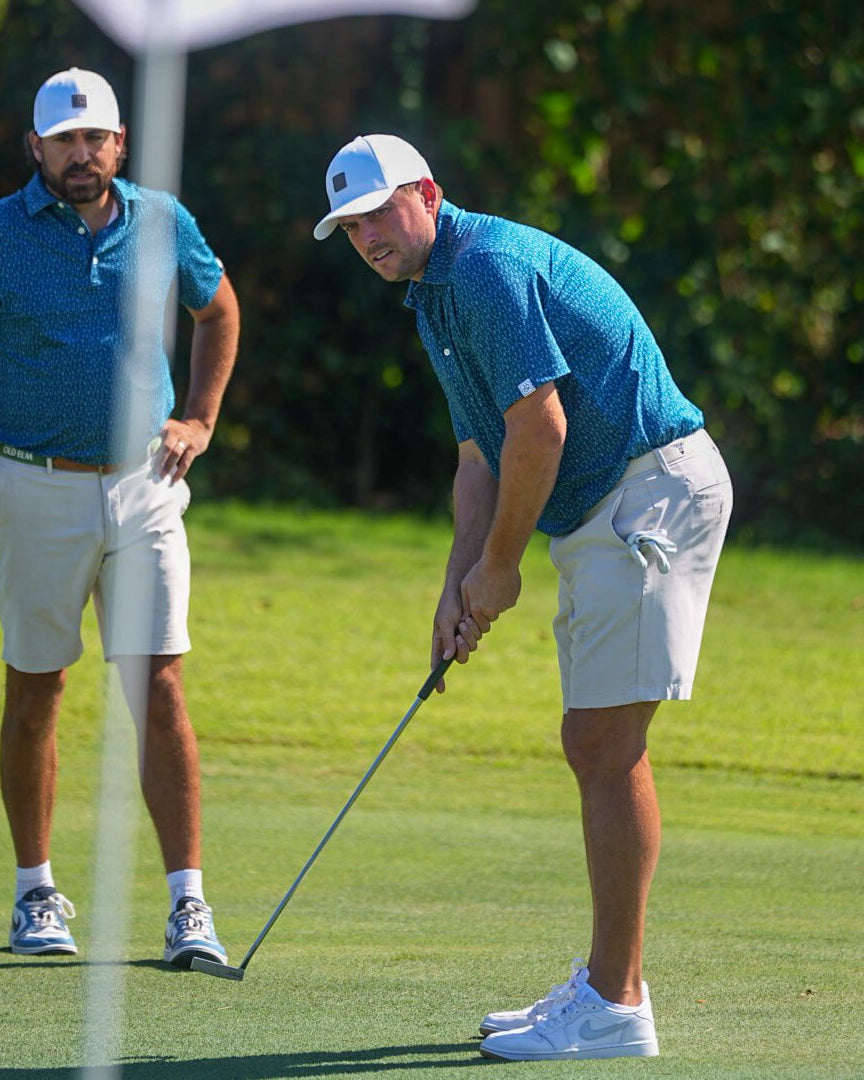
Somewhere in the last decade the golf polo became a $90 shirt. Walk into a pro shop or scroll the legacy brands and the good performance polos sit at $88 to $92, with a luxury tier above that. It's the same basic garment as the $69 polo on your screen right now, so the question is fair: what changed, and what are you actually paying for?
Full disclosure: we make golf polos, ours run $68 to $69, and we think that's what a polo of this caliber should cost. We're not going to publish our cost sheet, because no brand does. We will walk through the math the industry runs on, because most of a polo's price has nothing to do with the polo.
What a performance polo actually costs to make
Five things make up a polo's landed cost — what it costs a brand to have the finished shirt sitting in its warehouse.
Fabric is the single biggest input. A performance polo is a knit polyester-spandex blend: polyester for wicking and durability, spandex for stretch. Mill quality varies enormously. A good four-way-stretch knit that holds its color and shape through a season of washes costs meaningfully more per yard than the thin, shiny stuff on the clearance rack. This is where cheap polos save their money, and it's the difference you feel first.
Construction is labor minutes: cutting, sewing, finishing. An athletic cut costs more to sew well than a boxy one because the pattern is less forgiving. A collar that still lies flat in September was built with a proper interlining. The ones curling by July weren't.
Trims are the buttons, thread, collar stays, woven labels, hangtags, and the poly bag. Small individually, real in aggregate.
Testing and quality control cover shrinkage, colorfastness, and seam strength. Brands that skip this step pay for it later in returns.
Freight and duties get the shirt from the mill to a warehouse. Industry pricing guides put inbound freight and duties at roughly 10 to 30 percent on top of the factory price, and synthetic knits carry some of the highest duty rates in apparel.
Here's the number that matters: in the traditional wholesale model, a polo's landed cost usually works out to around a quarter of the price on the tag. Not because anyone is cheating you. Because of what happens next.
Where the price inflates
A polo that reaches a pro shop gets marked up twice before you see it.
The brand's markup. Standard practice in apparel wholesale is a 50 percent margin, which means the brand sells the shirt to the retailer at roughly double what it cost to land.
The retailer's markup. Retail runs on keystone pricing: double the wholesale cost again. A polo wholesaled at $45 goes on the wall at $90. Pro shops have priced this way for generations; the golf trade press was debating whether 40 or 50 percent of the ticket was fair back in the 1970s, and the answer settled near half.
So on a $90 polo, roughly half is the store's margin and roughly a quarter is the brand's, before you get anywhere near what the shirt cost to make. The exact split moves around by brand and channel. The structure doesn't.
Then there's everything a legacy brand pays for that isn't the shirt: tour sponsorships and the players wearing the logo on Sunday, licensing fees when the logo belongs to a team or a tournament, wholesale sales reps, trade shows, the co-op marketing that earns a spot on the pro shop wall, and a list price padded so the shirt can go 30 percent off in October and still make money. None of that is dishonest. Some of it is useful — you can try the polo on in person, and a tour logo is a kind of proof. But you're paying for all of it, and none of it changes the fabric.
The last layer is the logo premium. Once a brand becomes the country-club default, it can charge for being the country-club default. That's not a cost. That's a signal, priced.
What's worth paying for
- Fabric that performs. A polyester-spandex knit with real four-way stretch, a hand that isn't shiny, and enough weight to drape without clinging.
- Construction that lasts. A collar that holds its shape, flat seams that don't chafe under a bag strap, a hem cut to work tucked or untucked. This is the difference between a polo that looks good in March and one that still looks good in September.
- Fit engineering. An athletic cut that moves with a swing and still looks right at a desk. It takes more pattern work, and it's why a good polo doesn't fit like a gym shirt.
- Color that stays. Prints and dyes that survive the dryer and a summer of sweat. You can't see this on the hanger, which is why reviews that mention washing are worth more than reviews that mention unboxing.
Those four are real costs. A brand that skimps on them is selling you a $40 polo in a $90 wrapper.
What's not worth paying for
The logo. The tour player. The pro shop wall. The heavy paper hangtag. The box. A logo has never improved anyone's backswing, and the polo doesn't know who's wearing it on TV.
The honest test: if two polos use the same caliber of fabric and construction and one costs $20 more, the $20 buys a signal to other people, not a better shirt. Sometimes that signal is worth it to you. Just know that's the purchase.
How a $69 polo gets to $69

This is where we explain ourselves. Jack polos are $68 to $69 with the same caliber of four-way-stretch performance fabric as the $88 to $92 shirts. Not because we found a magic mill. Because we took the middle out.
We sell direct from our warehouse in Cypress, Texas. There's no retailer taking half the ticket, so there's no second keystone. We don't pay tour players to wear the shirt and we don't license anyone's logo. The people who design the polos are the people packing your box, and it ships within a business day. That's the whole trick: no golf markup, because there's nobody in the chain to mark it up for.
We're not the cheap option. There are $30 polos out there, and you can feel exactly where the money was saved. We're the premium shirt with the premium channel removed. Our men's golf polos average 4.9 stars across more than 250 reviews, and the most common comment is some version of "fits perfectly." They're unedited on our customer reviews page, and the longer story of why we started is on the about page.
If you want a place to start: the Boom Town in charcoal is the office polo, the Jack Gusta has 32 reviews and every one of them is five stars, and the Gulf of America is the one that gets asked about on the first tee. All $69, like every polo in our best sellers. If you're between sizes, the fit guide settles it.
Three checks before you buy any polo
- Read the fabric line. You want a polyester-spandex (or elastane) blend. If the listing won't tell you, that's your answer.
- Search the reviews for "wash." Anyone can love a polo on day one. Look for people describing it after a summer.
- Ask where the money went. If the brand is on TV every Sunday, part of your $90 is on TV every Sunday.
For a side-by-side, our guide to the best golf polos under $70 compares fabric, fit, and price line by line, including two honest picks that aren't ours.
FAQs
Why are golf polos so expensive?
Mostly distribution. A polo sold through a pro shop or department store is marked up twice — once by the brand, once by the retailer — and traditional retail runs on doubling the wholesale cost. Add tour sponsorships, logo licensing, and the premium an established brand charges for its name, and the shirt itself is a minority of the price.
Are expensive golf polos worth it?
Up to a point. Fabric quality, four-way stretch, and durable construction are worth paying for, and all three exist at the $60 to $70 level. Above that, the extra dollars mostly buy the brand's marketing and the retailer's margin rather than a better garment.
How much should a good golf polo cost?
A performance polo with real stretch fabric and solid construction runs about $60 to $70 from a direct-to-consumer brand and $88 to $92 or more from the legacy brands sold through pro shops. The difference is the channel, not the shirt.
Why are Jack polos $69 if the fabric is the same caliber?
Because we sell direct and skip the retailer's keystone markup, we don't fund tour contracts or logo licensing, and we pack orders ourselves in Cypress, Texas. Removing those layers is the difference between $69 and $90.
Do cheaper golf polos wear out faster?
Very cheap ones usually do — thin knits pill, collars curl, and colors fade, because fabric is where budget brands cut first. That's a different thing from a $69 polo built on the same caliber of fabric as a $90 one. Price alone doesn't predict durability; fabric and construction do.