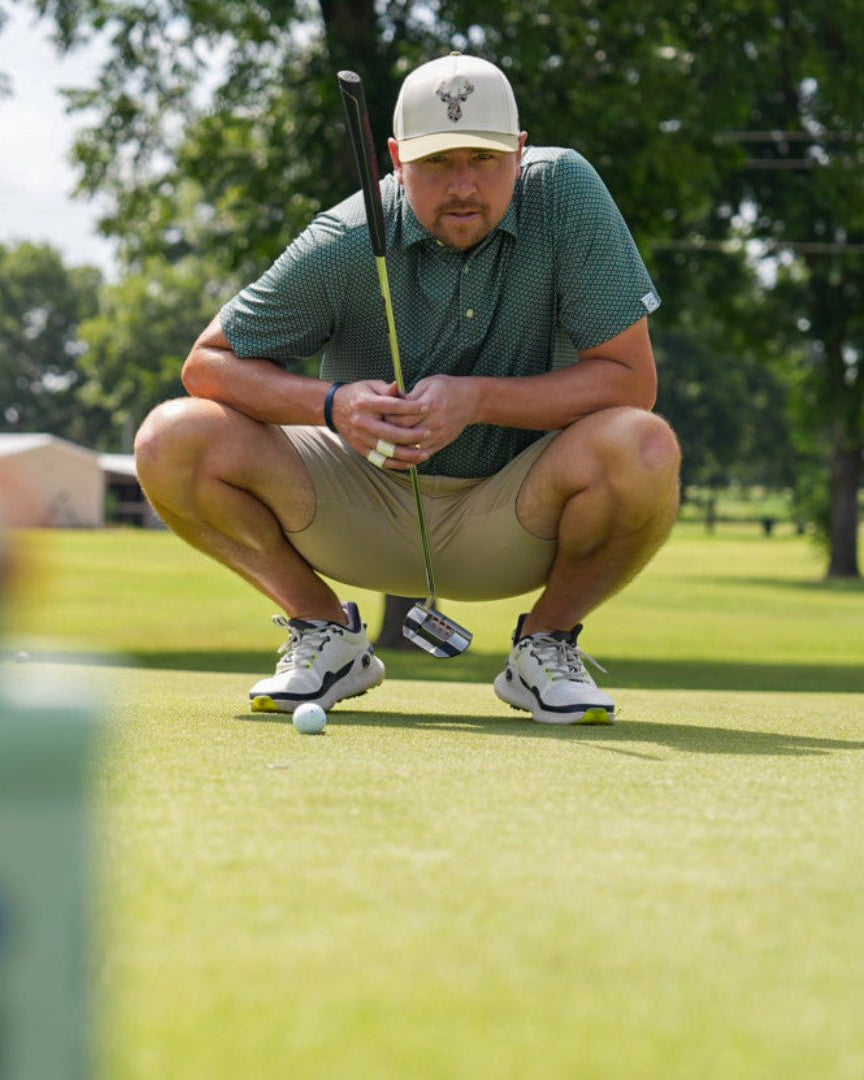
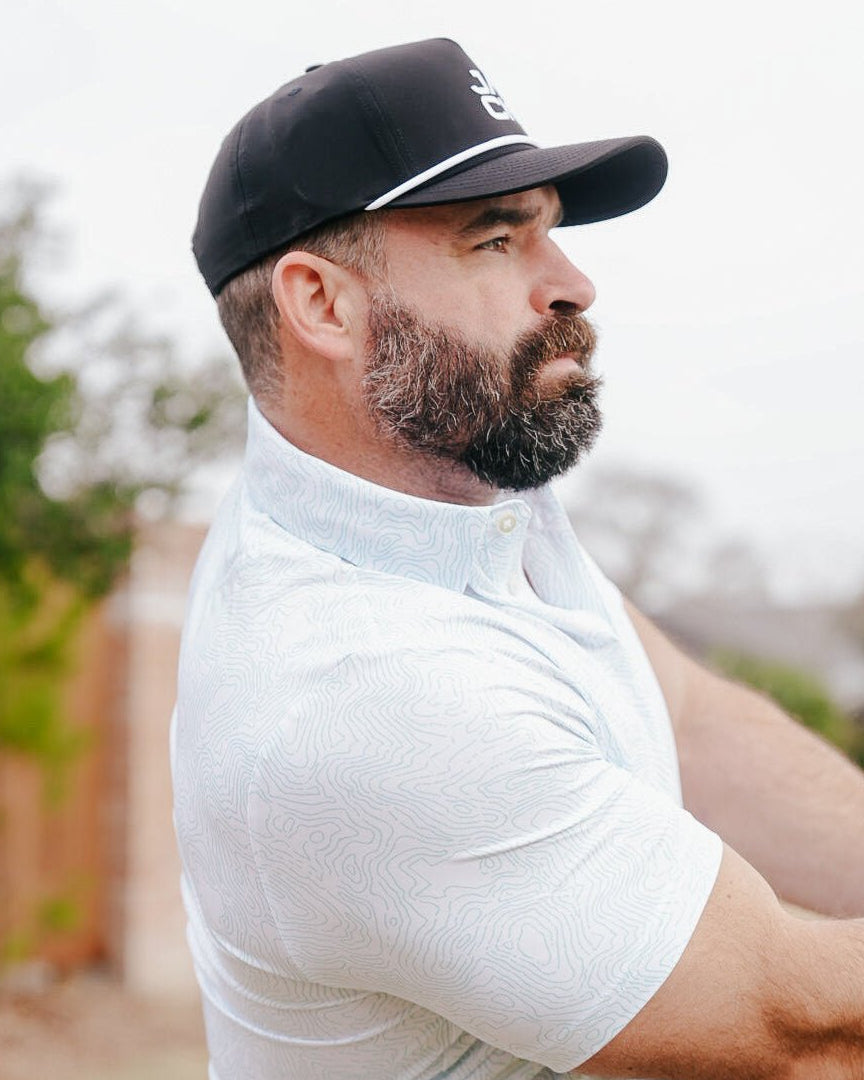
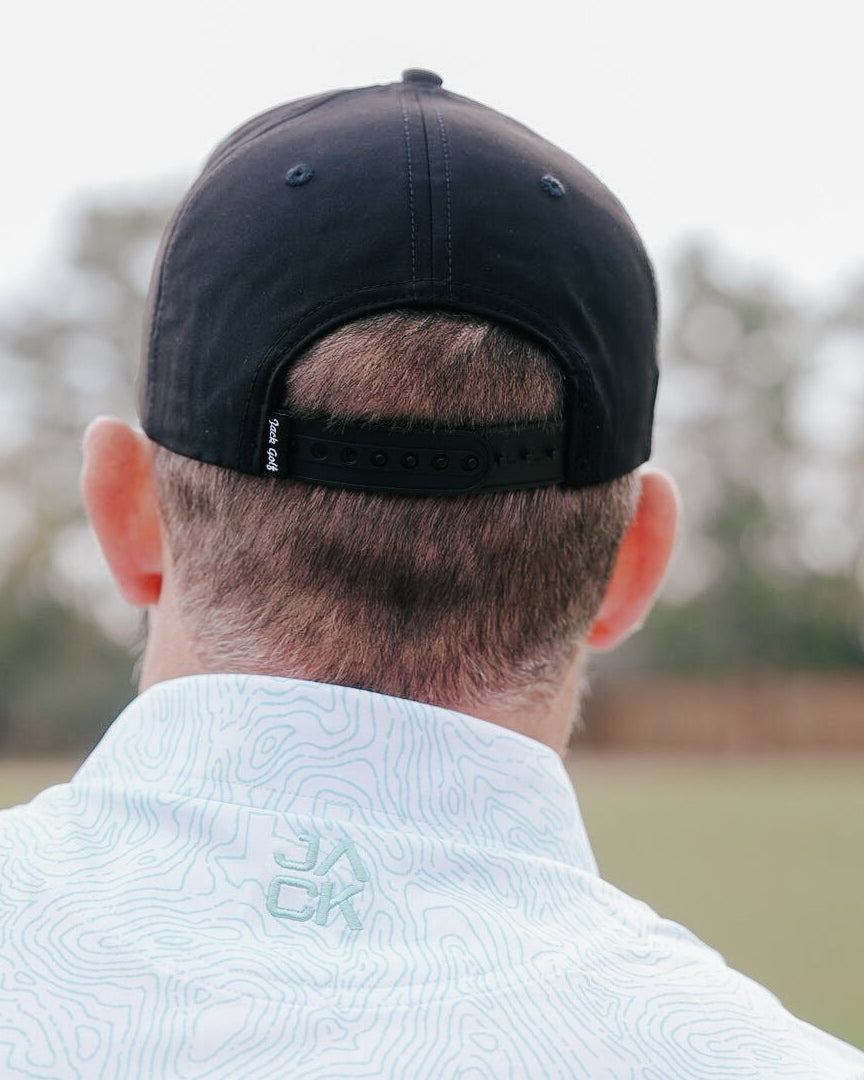
Most guys buy golf polos the same way they buy t-shirts: grab the size they've always worn, hope it works, wear it either way. Then they spend eighteen holes tugging at a sleeve or fighting a hem that won't stay tucked.
A polo that fits right does two things. It moves with your swing instead of against it, and it still looks sharp when you walk into the clubhouse afterward. Here's how to check every part of it, in the order that actually matters.
Start with the shoulder seams
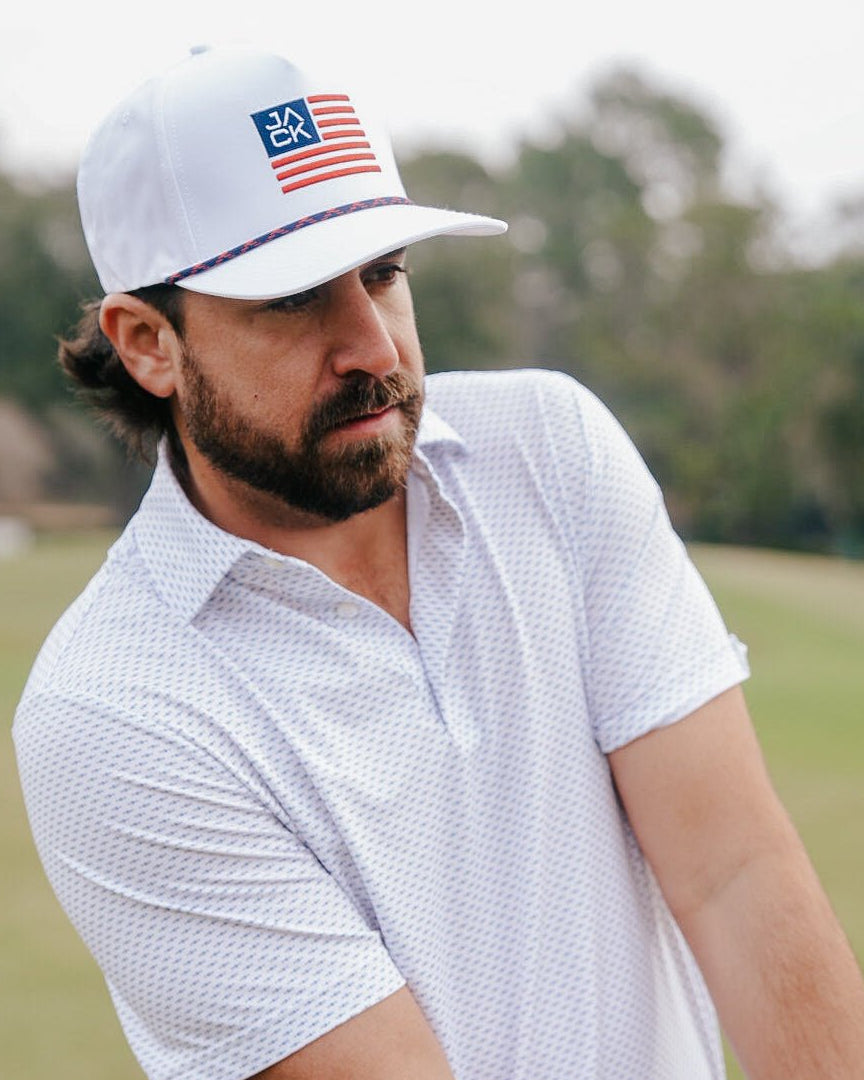
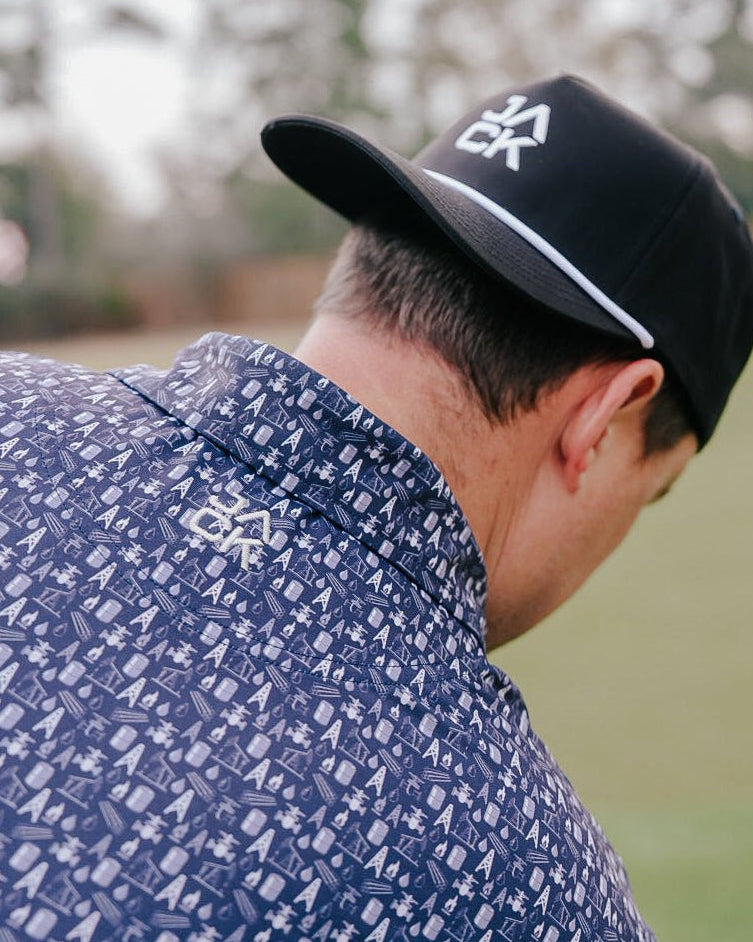
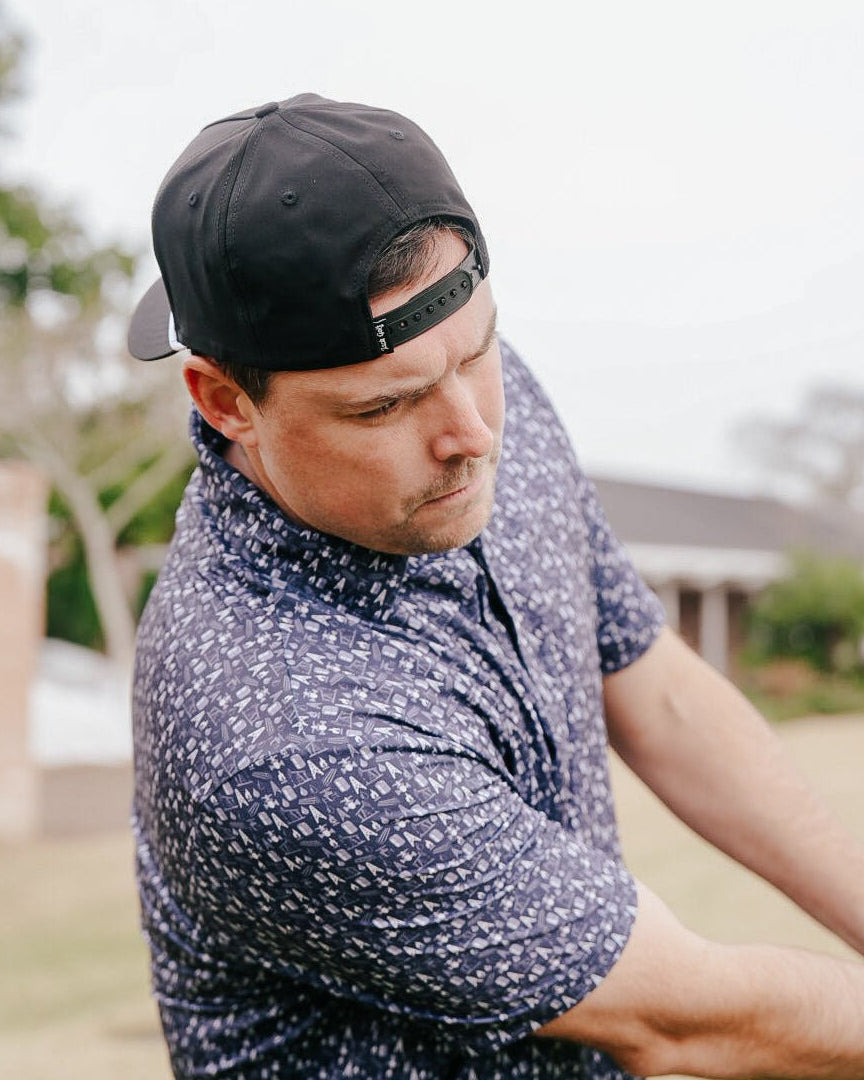
This is the fastest tell, and it's the one thing you can't fix later. The seam where the sleeve joins the body should sit right at the edge of your shoulder — where the flat top of your shoulder starts to curve down into your arm.
Seam hanging halfway down your bicep? The polo is too big, and no amount of tucking will hide it. Seam pulling up onto the top of your shoulder, with fabric straining when you reach across your body? Too small, and you'll feel it on every backswing.
Check this first because shoulders are the hardest part of a shirt to compensate for. A polo that's slightly loose in the chest still looks fine. A polo with the shoulders in the wrong place never does.

Chest and torso: the pinch test
Stand normally, arms at your sides, and pinch the fabric at the side of your chest. You want somewhere between one and two inches of loose material in your fingers.
Less than an inch and the polo is going to pull across your chest when you swing, and it'll show every detail underneath. More than two or three inches and you've got a tent — extra fabric that billows in the wind and reads baggy in photos.
The torso should follow your shape without gripping it. A good golf polo tapers slightly from chest to waist. It shouldn't balloon straight down like a box, and it shouldn't cling.
One thing worth knowing: fabric with real stretch changes this math. A polo built with four-way stretch can sit closer to the body and still let you move, because the material gives where a stiff cotton pique wouldn't. That's why our polos are cut athletic — the stretch does the work that extra fabric would otherwise have to do.
Sleeve length and opening
Sleeves on a golf polo should end around mid-bicep. Not at your elbow — that reads dated and adds visual bulk to your arm. Not up near your shoulder either, unless you're deliberately going for a gym look that most courses aren't.
The opening matters as much as the length. You want the cuff to rest against your arm with maybe an inch of room. Loose enough that it isn't cutting in, close enough that it isn't flapping.
If you've got bigger arms, this is often where standard-cut polos fail you — the body fits, the sleeve strangles. Athletic-cut polos generally handle this better because the sleeve is drafted with more room through the bicep.
Overall length: tucked, untucked, or both
Golf polos are traditionally cut to be tucked, which means they run longer than a casual polo. The hem should hit about mid-fly — long enough that it stays tucked through a full round without you re-tucking on the seventh tee.
If you want to wear it untucked after the round, the hem should land somewhere around the middle of your back pocket. Longer than that and it looks like a nightshirt. Shorter and it'll ride up when you reach.
Most modern golf polos, ours included, split the difference: long enough to stay tucked, short enough to look intentional untucked. That's what makes a polo work for dinner after the round instead of requiring a change of clothes.

Athletic fit vs. classic fit
These terms get thrown around loosely, so here's the practical difference.
Classic fit is cut straight through the body with generous room in the chest and waist. It's forgiving, it's traditional, and it's what most legacy golf brands built their reputation on. The downside is that on a lot of guys it reads boxy, and the extra fabric catches wind.
Athletic fit is tapered — more room through the chest and shoulders, narrower through the waist. It follows the shape of someone who works out without being tight. This is where most modern golf apparel has moved, and it's what we cut to.
Athletic fit does not mean small. That's the most common misunderstanding. A well-drafted athletic polo gives you more room where you need it for a golf swing — across the back and shoulders — and takes fabric out where you don't. If you've had bad experiences with slim-fit shirts binding your arms, that's usually a slim cut, not an athletic one.
What to do if you're between sizes
Sooner or later everyone lands here. A few rules that hold up:
Size to your shoulders and chest, not your stomach. A polo that fits your shoulders and is slightly snug at the waist looks far better than one that fits your waist and hangs off your frame.
Consider what you wear underneath. If you always wear a base layer in cool weather, or you plan to layer a quarter zip over the polo, size up.
Account for the fabric. Stretch fabric is more forgiving than rigid cotton. With a four-way stretch polo, the smaller of two sizes usually works — it'll give where a stiffer shirt would pull.
Our polos run true to size with an athletic cut, in S through 3XL. If you normally wear a large in a t-shirt, a large works here.
The 30-second fit check
Standing in front of a mirror with the polo on:
- Shoulder seams sit at the edge of your shoulders
- You can pinch one to two inches of fabric at your side
- Sleeves end around mid-bicep with about an inch of room in the cuff
- Hem hits mid-fly tucked, or mid-back-pocket untucked
- Reach across your body and swing — nothing pulls, nothing binds
That last one is the real test. A golf polo can pass every static measurement and still fail the moment you take a practice swing. Move in it before you commit.

Why fit matters more than the logo
Here's the part nobody at the pro shop mentions: a well-fitting polo at a fair price looks better than a poorly fitting one at twice the cost. Fit is what people actually notice. The logo on the chest is not.
That's most of the reason we built this brand. Our polos run $68 to $69, where comparable performance polos from legacy names typically land in the $88 to $92 range. Same premium feel, same four-way stretch, cut athletic for guys who still move like athletes — without the markup.
Browse men's golf polos or start with the best sellers if you want the short list.
Golf polo fit FAQs
Should a golf polo be tight or loose?
Neither. A golf polo should sit close to the body without pulling. The test: pinch the fabric at the side of your chest and you should get one to two inches of loose material. Tighter than that restricts your swing; looser than that looks boxy and catches wind.
Where should the shoulder seam sit on a golf polo?
Right at the edge of your shoulder, where the flat top begins to curve into your arm. If the seam hangs down your bicep the polo is too big. If it pulls up onto your shoulder the polo is too small. This is the single fastest way to check fit.
Should you tuck in a golf polo?
Most courses and clubs expect a tucked polo, and golf polos are cut longer specifically so they stay tucked through a round. Off the course it's your call — a polo cut to hit mid-back-pocket looks intentional untucked, which is what makes it wearable after the round.
Do golf polos shrink?
Performance polos made with synthetic stretch fabric hold their shape far better than cotton. Wash cold and hang dry and the fit stays consistent. High heat in the dryer is what damages stretch fabric over time, so skip it.
What size golf polo should I get if I'm between sizes?
Size to your shoulders and chest rather than your waist, and factor in the fabric. With a stretch polo the smaller size usually works. If you plan to layer over it in cool weather, size up.